Colombian Spanish Phrases Travelers Actually Need (Not the Tourist List)
Every travel guide to Colombia includes a phrase list. Most of them are wrong — not factually, but strategically.
They teach you how to order food and ask for directions. They give you the phrases that signal you’re a tourist who did their homework. That’s fine. But it’s not the same as the phrases that help you actually connect with people, navigate real situations, and stop conversations from grinding to an awkward halt the moment a local responds.
This guide is different. It’s built around how Colombian Spanish actually works — not how textbooks present it.
Why Colombian Spanish Deserves Special Attention
Colombian Spanish has a reputation for being one of the clearest and most neutral forms of Spanish in Latin America. That reputation is mostly earned — particularly in Bogotá and the highland cities, where the accent is measured and relatively free of the features that make other regional dialects challenging for learners.
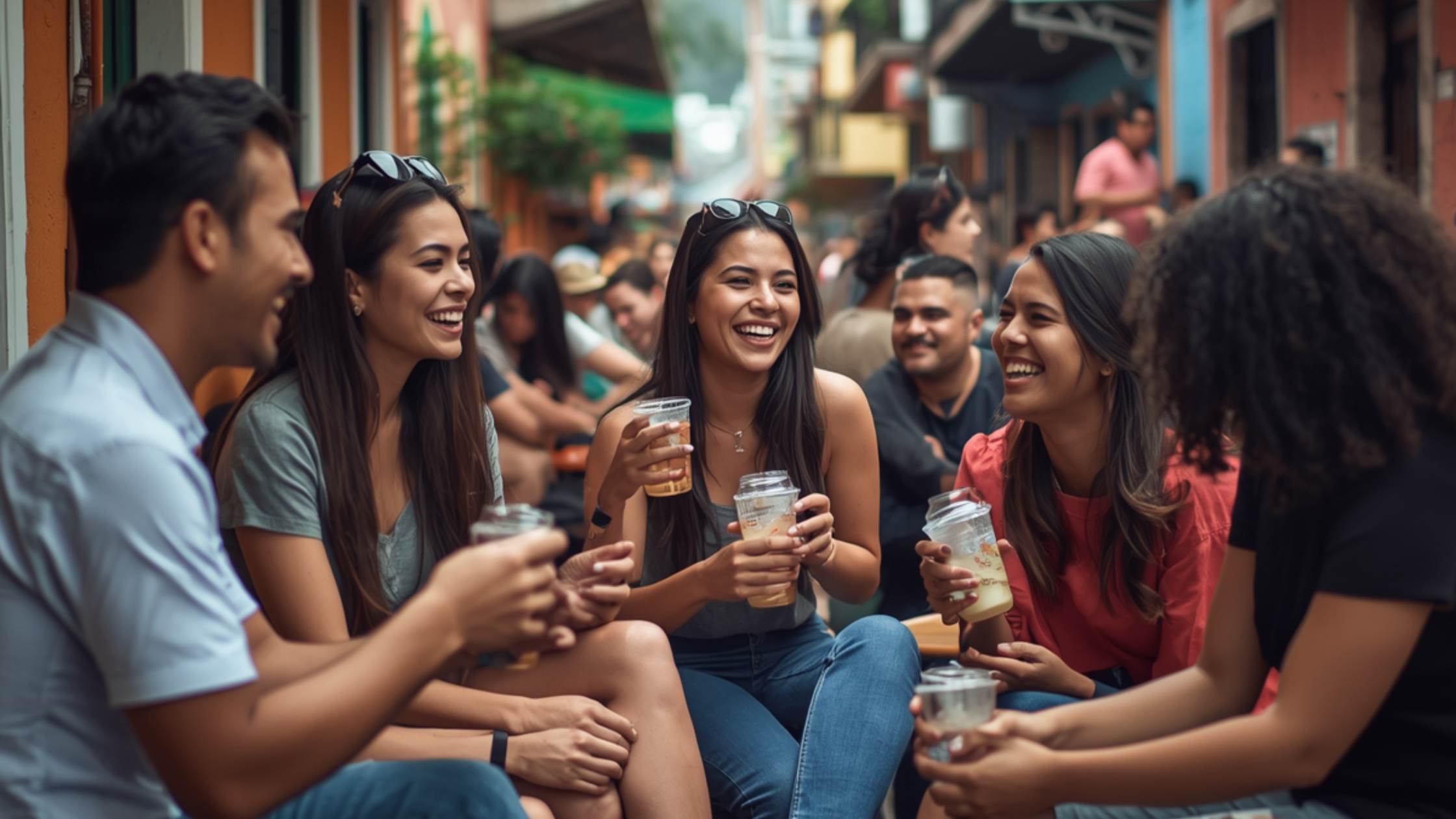
Medellín is a different story.
Paisas — the people of Antioquia, the region Medellín sits in — speak with a distinct accent, a specific rhythm, and a vocabulary that is genuinely their own. The famous Paisa singsong cadence (called el acento paisa) has a rising-falling melody that even fluent Spanish speakers need time to calibrate to. Add the slang, and you have a version of Spanish that rewards real preparation.
The good news: Colombians are exceptionally warm to people who make the effort. Getting a few things right earns you significant goodwill. Getting them wrong in an obvious tourist-phrase way signals that you’re not really paying attention.
The Greetings That Actually Matter
Most traveler phrase guides start with ‘hola’ and ‘buenos días.’ Those are fine. They’re also what everyone uses.
In Medellín, the greeting that immediately signals cultural awareness is:
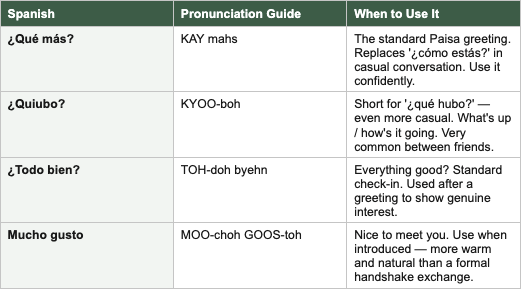
Note on delivery: Colombians are warm but they’re also attuned to energy. Say these with genuine warmth, not recitation. The words matter less than the tone.
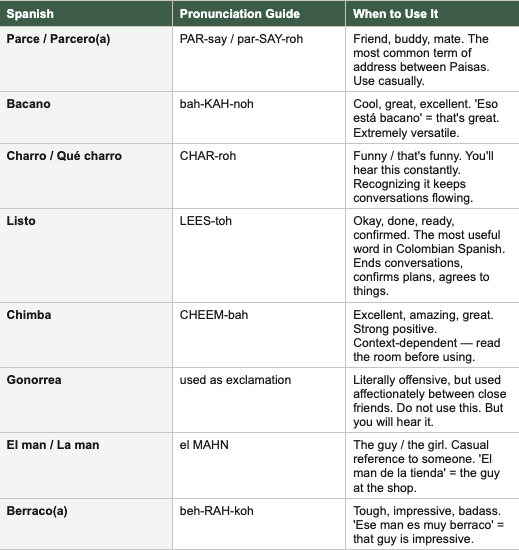
The Paisa Slang That Changes Everything
This is where most phrase guides stop and where real preparation begins. Paisa slang is not optional vocabulary — it’s the language of daily life in Medellín, and knowing it changes how people interact with you.
Phrases for Real Situations (Not Tourist Scenarios)
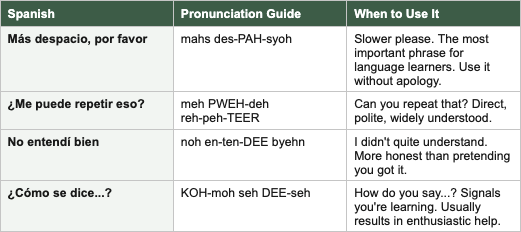
Tourist phrase guides prepare you for ordering coffee and asking where the bathroom is. Here’s what you actually need:
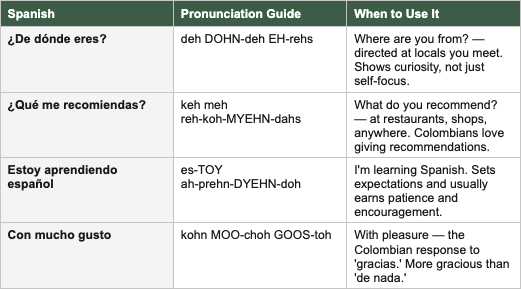
When a conversation is moving too fast:
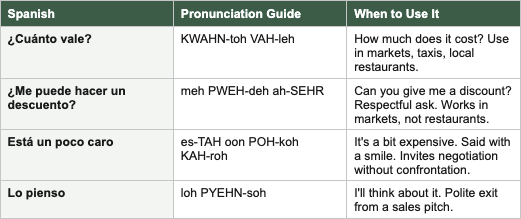
When negotiating or checking prices:
When building connection:
The Usted Situation: Why Formality Works in Your Favor
In most Latin American countries, ‘tú’ (informal you) is the default in casual conversation. Colombia — particularly the interior — is different. ‘Usted’ (formal you) is used widely, even between friends, family members, and people in casual settings.
For travelers, this is actually good news. Defaulting to ‘usted’ is always safe. It reads as respectful rather than stiff, and it’s the correct choice in any situation where you’re not sure of the relationship.
The mistake travelers make is assuming ‘tú’ is more modern or friendly. In a Paisa context, using ‘usted’ with a stranger signals that you understand Colombian social codes. That matters more than you’d expect.

The Listening Side: Why Your Phrases Stop Working
Here’s the honest truth that no phrase guide will tell you:
The phrases are only half the system. The other half is what happens after you use them.
You say ‘¿qué más?’ confidently. The Paisa responds at full speed, in Paisa slang, with a melody you haven’t calibrated to yet, assuming you’re fluent because your opener sounded fluent.
And then you have nothing.
This is where most travelers hit the wall in Colombia. Not because they didn’t try, but because their preparation was output-only. They practiced speaking. They didn’t practice listening and responding.
Real Colombian Spanish — the audio, the rhythm, the slang at speed — is what closes that gap. It’s what separates travelers who connect with people from travelers who have awkward exchanges and give up.