
The Argentine Cultural Code: How to Travel Buenos Aires Like You Belong There
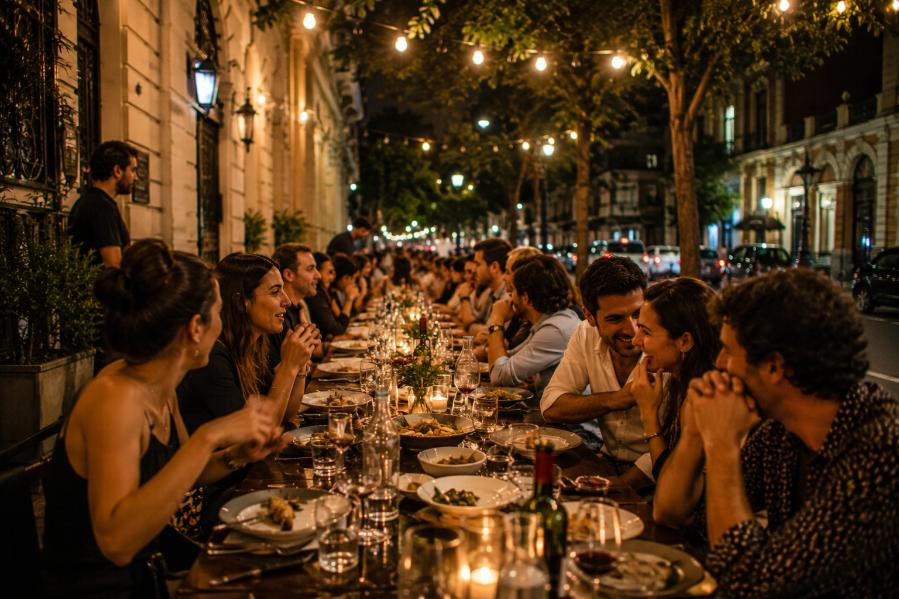
Argentines are warm. They will hug you on a second meeting, invite you to a friend’s birthday on day three, and tell you their family history over the second bottle of Malbec. But the warmth runs on a specific cultural code, and travelers who don’t see it can accidentally come across as cold, rushed, or weirdly formal — without ever knowing they did. The good news: the code is small, learnable in a week, and once you’re inside it, Buenos Aires becomes one of the easiest cities in Latin America to make real connections in.
The Greeting Is Not Optional
The single most important cultural cue in Argentina is the greeting. Argentines greet with one cheek kiss — right cheek to right cheek — between essentially everyone. Two women, two men, at first meeting, in casual settings, in some business contexts. The kiss is light, more of a press than an actual kiss, and it happens so quickly that travelers often miss it entirely the first time and accidentally pull back. This reads as cold. The fix is simple: when you’re introduced to someone, lean in slightly to the right side. Don’t overthink it. The other person will do the work. After a few days, you’ll be doing it automatically and the social temperature of every interaction will be warmer.

Time Is Soft
Argentines are not late. They are operating on a different definition of “on time.” If a porteño invites you to dinner at 10pm, the unspoken expectation is that you arrive at 10:30 or 10:45 — because arriving at 10:00 sharp would mean catching them mid-cooking, mid-getting-ready, mid-finishing-the-bath. Same goes for parties, casual gatherings, and even some professional meetings. The published time is when they start preparing. The actual time is twenty to forty-five minutes later. Don’t fight this. Don’t be the tourist who shows up at 10pm to a party and stands awkwardly in an empty room. Build the buffer in.
Long Meals Are the Default
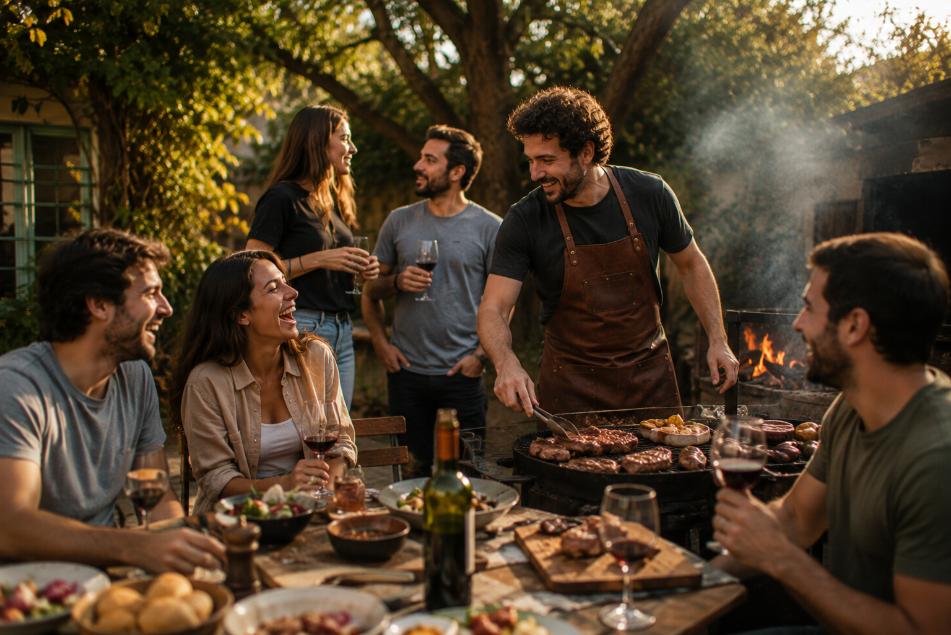
A meal in Argentina — particularly dinner, particularly with friends — is not a transaction with a beginning and an end. It’s an open-ended social event. Three hours is normal. Four is not unusual. There’s no “we should head home soon.” There’s no glance at the watch. The meal moves through several phases: drinks, antipasti, the main course (often a slow-cooked asado), the conversation that follows, dessert, an espresso, maybe an after-dinner digestivo, and then more conversation. Travelers who try to rush through this — who ask for the bill at hour two, who excuse themselves after dessert — communicate something they don’t mean to. Stay. The meal is the point.
Mate Is a Ritual, Not a Drink
If an Argentine offers you mate (the traditional yerba mate herbal tea served in a gourd with a metal straw called a bombilla), pay attention. Mate is shared. Everyone drinks from the same gourd, the same straw. The host fills it with hot water, hands it to you, you drink the entire serving (don’t sip and pass — finish it), and hand it back. They refill, hand it to the next person, and so on around the circle. Don’t wipe the bombilla. Don’t add sugar (some traditional drinkers do, but not all — let the host lead). Don’t say no without a graceful reason. Drinking mate with someone is one of the most intimate cultural acts in Argentina, and travelers who participate respectfully are immediately read as serious people.
Bills, Money, and the One-Person-Pays Rule
In Argentina, dividing the bill at a meal is unusual and slightly cold. The default is that one person pays — and another night, someone else pays. Or it gets resolved later between friends. Asking for separate checks at a casual dinner with locals reads as transactional. If you’re the visiting traveler, you can certainly offer to pay (it’s a beautiful gesture), but don’t be surprised when someone at the table just picks up the whole thing without making a fuss. Receive it gracefully and reciprocate next time.
Conversation Is the Sport
Argentines love to talk. They love to debate. They love politics, philosophy, football, family, food, and whatever interesting thing happened that day. A dinner can swing from the Falklands to Borges to whether River Plate will win the league, and it’s all done with passion but rarely with venom. The trick for travelers is to participate — share your own opinions, push back gently, ask follow-up questions — rather than just listen. Argentines respect a person with views. The flat, polite, “interesting!” response that works in some other cultures will land as boring here. Engage. They’re going to love you for it.
The Argentine cultural code — and the codes for every Latin American country we cover — is free inside the Lingo Society community. Come find us.